
Generic selectors
    Exact matches only
    Search in title
    Search in content
    Post Type Selectors

    novini-en

    How to Develop Fine Motor Skills in Children Aged 0 to 3

    Practical Games and Activities for Developing Skills Through Everyday Life

    The development of fine motor skills in early childhood is crucial for coordination, speech, and future writing skills. For children aged 0 to 3, this is most effectively supported through play and daily activities. For babies (0–1 years), games involving grabbing and releasing objects, rattles, and soft toys with different

    Poland Introduces Regulatory Changes to Early Childhood Education with a Focus on Skills

    The New Curriculum Puts the Children at the Center of Learning

    Poland is introducing a new framework for preschool education as part of a broader reform of the education system. The changes, signed in March 2026, will take effect on September 1, 2026, and will cover all preschool-aged children. The new approach emphasizes the development of key competencies, social skills, and

    European Council Calls for Strengthened Policies to Address Poverty, Social Exclusion, and the Well-being of Future Generations

    New Recommendations Emphasize Access, Quality, and an Equal Start

    The Council of the European Union calls for strengthening policies for children, including in the area of early childhood development. In conclusions adopted in 2026, member states are encouraged to increase investment in services for children and to ensure access to quality education and care from an early age. The

    Development of the EMBRACE Project’s Dynamic Activity Book Begins

    Partners Create Practical Resources for Early Childhood Development

    During the first transnational meeting of the EMBRACE project, work began on one of the main outputs—the “EMBRACE Dynamic Activity Book for Children Aged 0 to 3.” The partners developed a common thematic framework and assigned responsibilities for creating the content, based on 8 thematic modules across 5 areas of

    The EMBRACE Project Is Now Online

    A Digital Platform Supporting Early Childhood Education and Care

    We are pleased to present the official website of the EMBRACE project: https://embrace-edu.eu/, where you will find information, resources, and project outcomes. The site provides access to information about the project’s objectives and activities, the partnership, as well as the key results that will be developed within the initiative. Special

    Transnational Meeting of the EMBRACE Project held in Utena, Lithuania

    Partners agree on key steps for the development of the EMBRACE Dynamic Activity Book for Children Aged 0-3

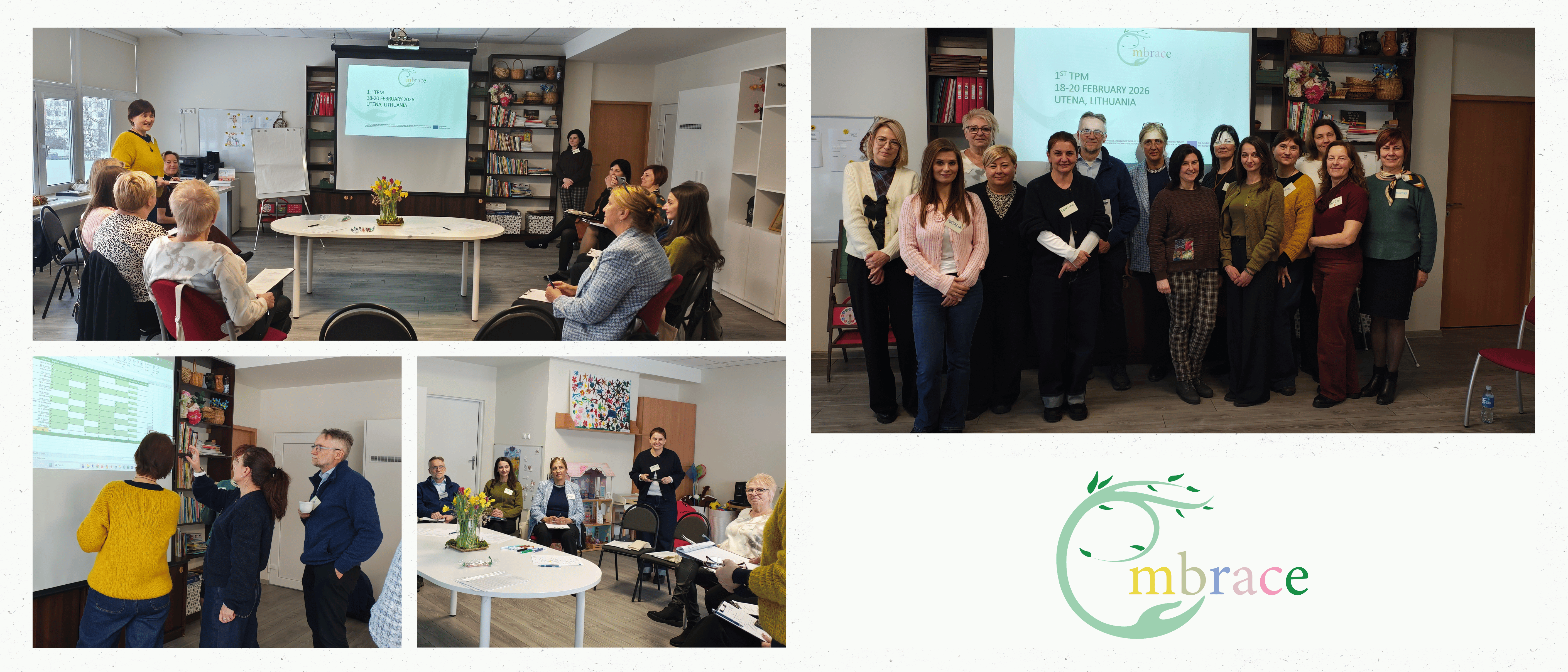
    Between 18 and 20 February 2026, the first face-to-face transnational meeting of the EMBRACE project, funded under the Erasmus+ Programme, was held in Utena, Lithuania. The event was hosted by the Utena Education Centre and Gandrelis Kindergarten, project partners, and took place at Gandrelis Kindergarten. During the meeting, the project

    Recommendations for early childhood curriculum development

    EMBRACE will contribute to improving policies and practices in early childhood education

    Recommendations for early childhood curriculum development

    Within the framework of the EMBRACE project, recommendations for early childhood curriculum development and practices will be elaborated, based on needs analysis, European good practices and the partners’ practical experience. The document will be addressed to kindergarten leaders, decision-makers and educational institutions, with the aim of supporting the development and

    New training opportunities for early childhood professionals

    EMBRACE will support the professional development of teachers and specialists working with children aged 0 to 3

    New training opportunities for early childhood professionals

    One of the core activities of the EMBRACE project is strengthening the professional competences of specialists in early childhood education and care. The project will develop a specialised training programme targeting teachers, medical and support staff, psychologists, speech therapists and other professionals working with children aged 0 to 3. The

    EMBRACE with a focus on inclusion and quality

    The project places the child, the teacher and the family at the centre of the educational process

    EMBRACE with a focus on inclusion and quality

    EMBRACE addresses some of the most important challenges in early childhood education and care, including the need for well-trained professionals, inclusive environments and active parental involvement. The project will engage teachers, psychologists, speech therapists and support staff, while also raising parents’ awareness of the importance of early childhood development. Through

    12