

NEWS
Independence in Children Aged 1 to 3
Between the ages of one and three, a child makes tremendous progress in their development. One of the most important stages during this period is the pursuit of independence. This is the time when a young child begins to show a desire to perform various daily activities on their own. Independence at this age does not mean the child can manage completely on their own, but rather that they try, explore, and actively participate in daily activities – often they may just try to hold a spoon, put on their shoes, choose a toy, or help with tidying up. Although these attempts are slow and imperfect, they are extremely important for their development. When a child has the opportunity to try things on their own, they build confidence and believe they can manage and solve small tasks, which directly influences the development of self-esteem and confidence in later years. Independence also develops important skills – coordination, thinking, patience, and responsibility. For example, when trying to stack blocks or put away their toys, a child learns not only movement but also order, sequence, and consistency. Of course, the drive for independence often goes hand in hand with the word “no.” The child begins to express their own opinions and preferences. This is a normal part of growing up, not stubbornness. The role of parents is to encourage these attempts with patience. Instead of rushing to do everything for the child, we can give them time, choice, and support. Along the way, there will inevitably be small messes—spilled water, turned-inside-out clothes, or scattered toys but these are part of the important learning process. Independence between the ages of 1 and 3 is the first step toward building confident, capable, and curious individuals. Every small opportunity for a child to try an activity or task on their own builds the calmness and confidence with which they will face tomorrow. Read more | 27.04.2026 How Small Daily Experiences Build Valuable Skills for Life  |
How to Develop Fine Motor Skills in Children Aged 0 to 3
The development of fine motor skills in early childhood is crucial for coordination, speech, and future writing skills. For children aged 0 to 3, this is most effectively supported through play and daily activities. For babies (0–1 years), games involving grabbing and releasing objects, rattles, and soft toys with different textures are suitable. These stimulate the senses and control of movement. For children between 1 and 2 years old, activities such as stacking blocks, placing objects in boxes, and playing with large puzzles can be included. These games develop hand-eye coordination. After age 2, drawing with crayons, stringing large beads, and sorting by shape and color are recommended. This helps build more precise movements and concentration. It is of utmost importance that the chosen activities are safe, age-appropriate, and carried out without pressure from an adult. The best results in the development of fine motor skills are achieved when the child learns through play and active participation. Read more | 19.04.2026 Practical Games and Activities for Developing Skills Through Everyday Life  |
Poland Introduces Regulatory Changes to Early Childhood Education with a Focus on Skills
Poland is introducing a new framework for preschool education as part of a broader reform of the education system. The changes, signed in March 2026, will take effect on September 1, 2026, and will cover all preschool-aged children. The new approach emphasizes the development of key competencies, social skills, and personal growth, rather than the memorization of knowledge. It calls for limiting the use of digital devices and increasing practical activities and experiences that support children’s mental, physical, and emotional development. The reform is part of the “Compass for the Future” strategy and aims to better prepare children for school through an integrated and competency-based approach. It introduces clearer areas of development and encourages the child’s active role in the learning process.
Read more | 15.04.2026 The New Curriculum Puts the Children at the Center of Learning  |
European Council Calls for Strengthened Policies to Address Poverty, Social Exclusion, and the Well-being of Future Generations
The Council of the European Union calls for strengthening policies for children, including in the area of early childhood development. In conclusions adopted in 2026, member states are encouraged to increase investment in services for children and to ensure access to quality education and care from an early age. The European Child Guarantee remains a key instrument, requiring countries to ensure access to key services, including early childhood education, healthcare, and social support, particularly for vulnerable groups. At the same time, new analyses highlight the need for greater coverage of children under the age of 3 in the education system, as well as measures for affordable, inclusive, and high-quality early childhood services, with special attention to the most vulnerable children. The European Council’s recommendations also include the development of a safe, inclusive, and age-appropriate digital environment for young people. Read more | 10.04.2026 New Recommendations Emphasize Access, Quality, and an Equal Start  |
Development of the EMBRACE Project’s Dynamic Activity Book Begins
During the first transnational meeting of the EMBRACE project, work began on one of the main outputs—the “EMBRACE Dynamic Activity Book for Children Aged 0 to 3.” The partners developed a common thematic framework and assigned responsibilities for creating the content, based on 8 thematic modules across 5 areas of development and 2 age groups. The топицс cover areas close to children’s daily lives, such as “Me and My Body,” “I Play and Discover,” “Colors and Shapes,” “I Move and Grow,” and “My Everyday World.” The activities are aimed at developing key areas such as cognitive development, emotional and creative expression, exploratory play, social skills, and habits related to health and safety. This structured approach ensures a balanced and consistent reinforcement of knowledge and skills during the early childhood development stage. A unified template for developing the activities was presented as the primary working tool, ensuring quality, consistency, and practical applicability. It includes clear guidelines on the objectives of the activities, the necessary materials, the steps for implementation, the digital components, as well as methodological instructions for the teacher and questions for assessing the acquired skills. During the working sessions, the partners generated initial ideas for activities and exchanged best practices from their professional experience, which contributed to the creation of realistic and applicable solutions for working with young children. The start of this collaborative work is an important step toward creating the project’s innovative resources to support professionals in the field of early childhood education and care. Read more | 02.04.2026 Partners Create Practical Resources for Early Childhood Development  |
The EMBRACE Project Is Now Online
We are pleased to present the official website of the EMBRACE project: https://embrace-edu.eu/, where you will find information, resources, and project outcomes. The site provides access to information about the project’s objectives and activities, the partnership, as well as the key results that will be developed within the initiative. Special attention is given to Work Package 2 – “EMBRACE Dynamic Activity Book for Children Aged 0 to 3,” which will provide innovative, interactive, and practical resources for professionals in the field of early childhood development. The platform is available in four languages—English, Bulgarian, Lithuanian, and Polish—ensuring wide dissemination and usability of the developed materials. The website will also allow users to track the project’s progress, stay updated on the latest news and events, and access the resources that are yet to be developed.
Read more | 27.03.2026 A Digital Platform Supporting Early Childhood Education and Care  |
Transnational Meeting of the EMBRACE Project held in Utena, Lithuania
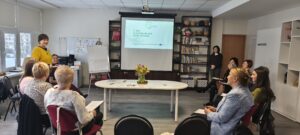
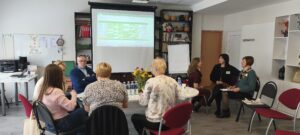
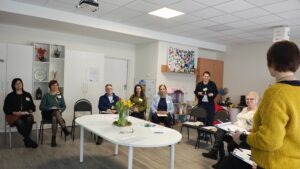
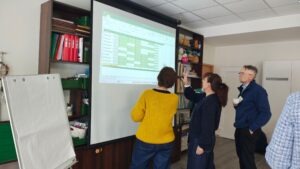
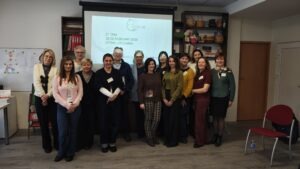
Between 18 and 20 February 2026, the first face-to-face transnational meeting of the EMBRACE project, funded under the Erasmus+ Programme, was held in Utena, Lithuania. The event was hosted by the Utena Education Centre and Gandrelis Kindergarten, project partners, and took place at Gandrelis Kindergarten. During the meeting, the project coordinator, RAABE Bulgaria, presented the official EMBRACE project website: https://embrace-edu.eu/ and its four language versions (English, Bulgarian, Lithuanian and Polish), as well as the project’s Facebook page as one of the main channels for disseminating information, project results and upcoming events: https://www.facebook.com/profile.php?id=61587587426551&sk=about The partners committed themselves to actively promoting the project among stakeholders and teachers in the field of early childhood education and care. Special emphasis was placed on the developed concept and structure of the “EMBRACE Dynamic Activity Book for children aged 0-3”. During the working sessions, responsibilities and deadlines for content development were allocated among the partners. Participants also had the opportunity to visit the host kindergarten and gain first-hand insight into its practices in early childhood education and the inclusion of children with special educational needs. The first transnational meeting of the EMBRACE project laid a solid foundation for coordinated cooperation among partners and for the successful development of innovative resources in support of early childhood education and care. Read more | 26.02.2026 Partners agree on key steps for the development of the EMBRACE Dynamic Activity Book for Children Aged 0-3 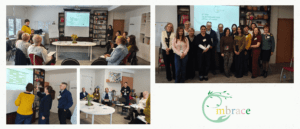 |

Recommendations for early childhood curriculum development
Within the framework of the EMBRACE project, recommendations for early childhood curriculum development and practices will be elaborated, based on needs analysis, European good practices and the partners’ practical experience. The document will be addressed to kindergarten leaders, decision-makers and educational institutions, with the aim of supporting the development and implementation of higher-quality and more inclusive educational models for children aged 0 to 3. With this result, the EMBRACE project will build on the achievements of its activities and ensure the sustainability of its impact, contributing to long-term improvements in early childhood education and care systems at both national and European level. Read more | 05.02.2026 EMBRACE will contribute to improving policies and practices in early childhood education  |
New training opportunities for early childhood professionals
One of the core activities of the EMBRACE project is strengthening the professional competences of specialists in early childhood education and care. The project will develop a specialised training programme targeting teachers, medical and support staff, psychologists, speech therapists and other professionals working with children aged 0 to 3. The training will be delivered through an online platform and will include thematic modules, practical examples and innovative pedagogical approaches. A strong emphasis will be placed on children’s social-emotional development, inclusion and the creation of a safe and stimulating learning environment. Through these activities, EMBRACE aims to support continuous professional development and encourage the application of modern and effective practices in everyday work with young children. Read more | 05.01.2026 EMBRACE will support the professional development of teachers and specialists working with children aged 0 to 3  |
EMBRACE with a focus on inclusion and quality
EMBRACE addresses some of the most important challenges in early childhood education and care, including the need for well-trained professionals, inclusive environments and active parental involvement. The project will engage teachers, psychologists, speech therapists and support staff, while also raising parents’ awareness of the importance of early childhood development. Through trainings, workshops and information events, EMBRACE will reach a wide community of stakeholders. The project is expected to have a long-term impact by supporting the development of sustainable practices and policies in the field of early childhood education and care. Read more | 21.12.2025 The project places the child, the teacher and the family at the centre of the educational process  |